




Choosing a curtain heading style

- Jennifer Elliot
- Consultant
In short
Your curtain heading style is how the curtains are pleated and sewn at the top, and it shapes how they fall and how the whole room feels. The pencil pleat is the most common, neat and classic and suited to any room, while the pinch pleat (single, double or triple) ranges from economical to opulent and looks especially elegant on a rod. Other options like the reverse pleat, our own Paris Wave and the simple tab top each suit different fabrics and settings, and more pleats mean a wider stack beside the window.
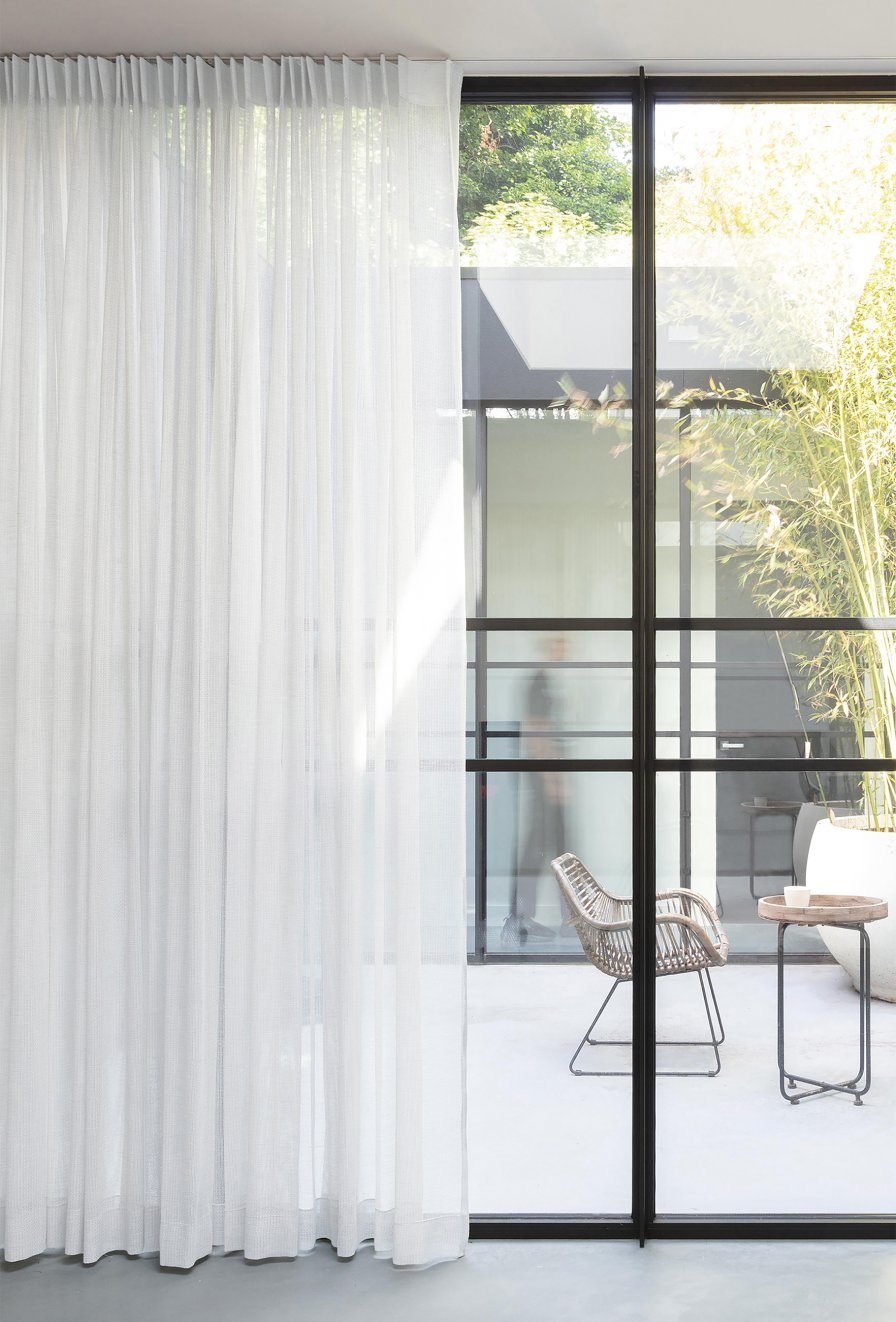
You’ve decided on curtains. You may have even gotten as far as choosing your fabric. But have you thought about the heading style? This is how the curtains are pleated and sewn at the top. The heading style you choose will dictate how your curtains fall, which has a massive effect on the overall look and feel. Some are suitable for all rooms, while others work best in certain areas. So let’s go over some of the most commonly chosen options.
Table of contents
What is a pencil pleat?
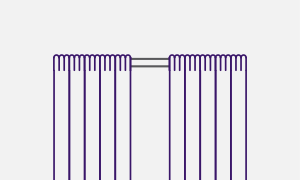
Neat, elegant and classic. The pencil pleat (named because the tightly packed folds look like a row of pencils) is the most common heading style. Pencil pleated curtains have a heading tape at the back with three cords running through it. Pulling the cords concertinas the fabric, knotting the cord holds the look in place. The heading tape also has three rows through which the hooks can go to adjust the hanging height. Pencil pleat curtains can be hung on either a track or rod and rings. The relaxed and classic look of the pencil pleat makes it suitable for any room.
For the full picture, read our guide to choosing the right curtains for your home.
What is a pinch pleat?
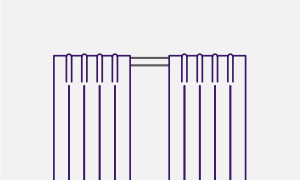
There are lots of variations of the pinch pleat. Like the name suggests, folds of fabric are pinched and tacked together (facing outwards into the room) to create a stylish heading and even waves in the hanging curtain. The pleats are created by making folded creases in the stiff material at the back (this is called buckram); hooks are then inserted and the curtain can be hung on a track or rod and rings. Pinch pleated curtains can hang on tracks but look so much more elegant on a rod.
The single pleat is classic and economical, and ideal for small spaces and patterned fabric.
The double pleat achieves a contemporary feel, whilst maintaining fabric efficiency. The finished look is full, smart and elegant.
The triple pleat (also called a French pleat) is a very formal heading style and creates an opulent, full curtain. It does require more fabric to achieve. This look is suitable for any room, but with such a decorative heading why not choose it for a room where it can be admired often.
Something to factor in with a pinch pleat, is that the greater number of pleats, the wider they stack to the side when open, simply because there is more fabric.
What is a reverse pleat?
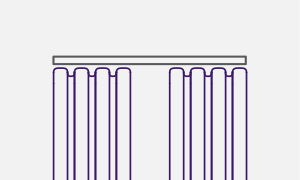
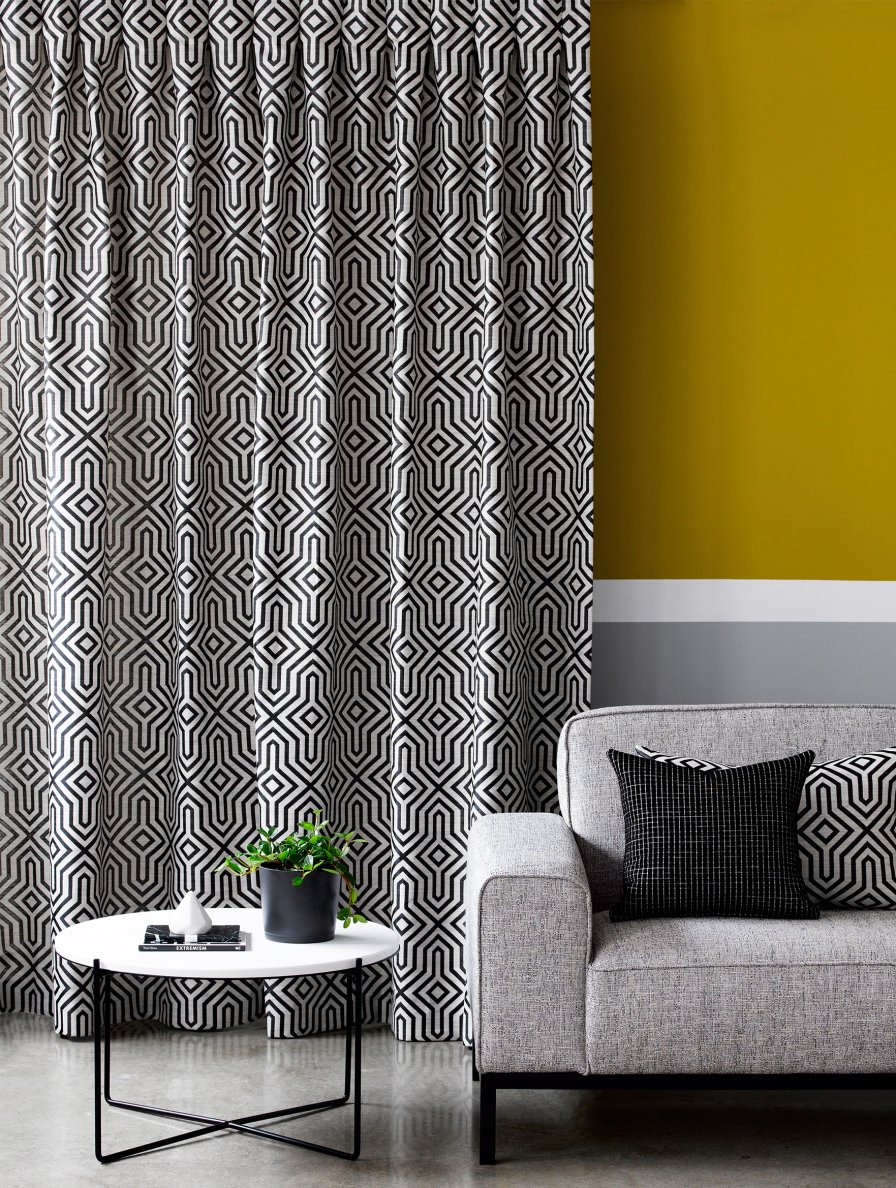
Also known as a box pleat or inverted pleat, the pleat is hidden at the back of the curtain rather than the front. This heading style creates deep folds down the length of the curtain. It is best saved for full-length curtains as it can make shorter lengths look too bulky. Also, ensure there is ample room on either side of the window to accommodate this larger stack back.
The reverse single pleat lends itself to a beautiful, minimalistic look, creating an illusion of fullness whilst requiring only minimal fabric.
The reverse double pleat, when paired with contemporary fabric, establishes a clean, minimalistic look.
Paris wave
Designed by Russells Curtains and Blinds, the Paris Wave heading style combines an inverted pleat with a rounded front like a wave pleat, giving the curtain a soft and full appearance.
Tab top pleat
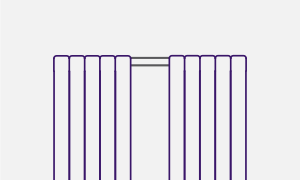
This is the most simple of curtain systems. Tab top curtains have fabric loops evenly spaced across the top through which the curtain rod is fed. The drawback of this heading style is that they are not the smoothest to open and close so is best used on lightweight fabrics, sheers that are rarely opened or decorative drapes that are rarely closed.
Ready to find the right curtains for your home? Request a free in-home consultation and one of our local consultants will bring the samples to you, measure up, and give you a no-obligation quote.
Found this helpful? Share it with others…
Guides
View all
Choosing the right curtains for your home
Not sure which curtains will suit your home? Find out everything you need to know with this free guide.


Frequently asked questions
What is a curtain heading style?
The heading style is how your curtains are pleated and sewn at the top. It’s easy to overlook, but it dictates how the curtains fall and has a big effect on the overall look and feel of a room — some styles suit any room, while others work best in particular settings.
What is the most common curtain heading style?
The pencil pleat is the most common. Its tightly packed folds look like a row of pencils, it’s neat, classic and relaxed, and it can hang on either a track or a rod with rings, which makes it suitable for just about any room.
What’s the difference between single, double and triple pinch pleats?
They’re all variations of the pinch pleat. Single pleat is classic and economical and great for small spaces and patterns, double pleat is full and elegant while staying fabric-efficient, and triple (French) pleat is the most formal and opulent and uses the most fabric.
Does the heading style affect how far curtains stack back?
Yes. The more pleats in your heading, the more fabric there is, so the curtains stack wider to the side when open. It’s worth allowing room on either side of the window — your local Russells consultant can help you choose a style that suits your space.
Expert advice at home
We come to you, anywhere in New Zealand. Because your place is the best place to choose curtains and blinds.