




What are honeycomb blinds?

- Karina Dollman
- Consultant
In short
Honeycomb blinds (sometimes called cellular blinds or shades) get their name from the honeycomb-shaped cells you can see from the side. Those cells trap a pocket of air that helps keep your home warmer in winter and cooler in summer, much like double glazing. They come in a range of opacities, colours and cell sizes, with several easy ways to operate them, so your local Russells consultant can help you find the right combination for each window.
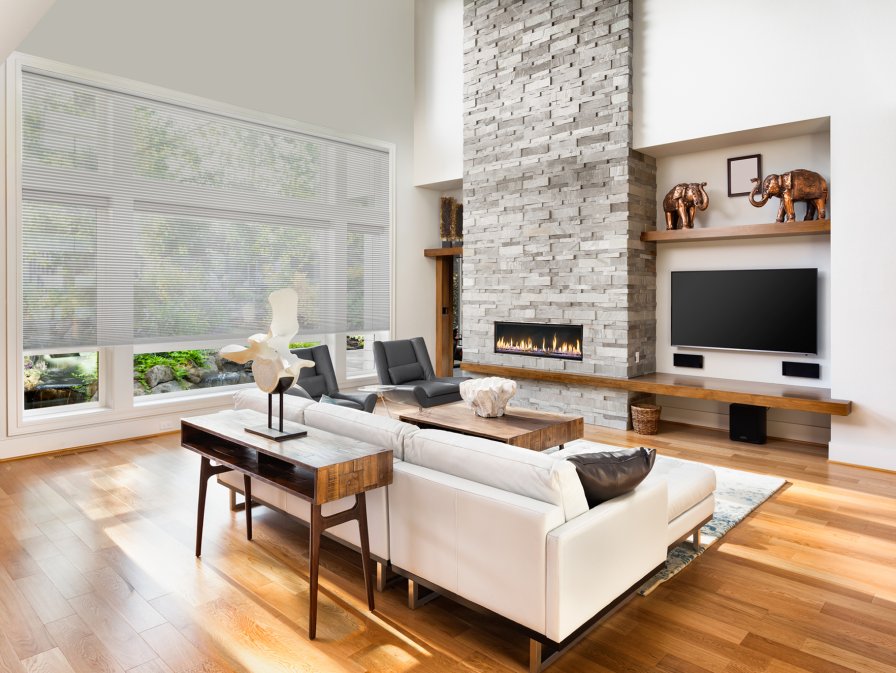
Honeycomb blinds get their name from their cell-like structure, which resembles a honeycomb when you look at it side on. They are sometimes called cellular blinds or shades. The cells are what trap air in their distinct pockets to help keep your home warm in winter and cool in summer.
Honeycomb blinds come in various levels of opacity and translucency, in many different colours, with different cell sizes that offer different benefits and looks. In this article, we’ll cover what they look like, how they work and why they’re a great choice.
Table of contents
What do they look like?
As mentioned above, these blinds are characterised by their honeycomb shaped cells. Whilst at the side they look like a honeycomb, from the front, the blind has beautifully uniformed pleats with subtle horizontal lines.
What cell sizes are available?
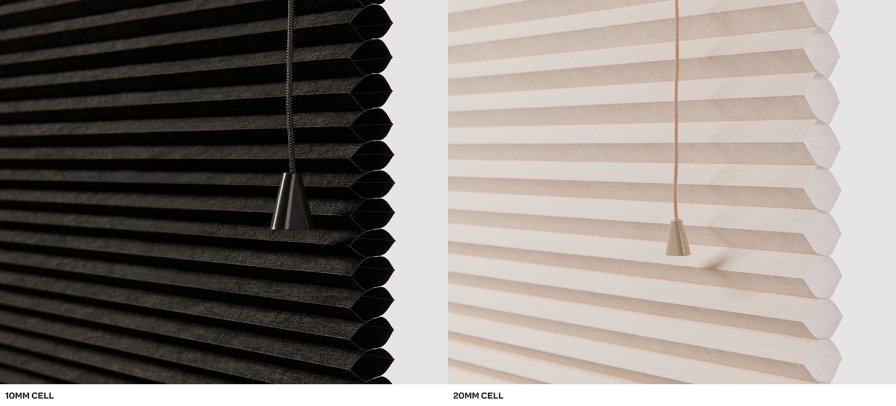
The 10mm honeycomb cell size creates quite a slimline look which suits smaller windows and is also great for a range of windows where bigger products won’t fit snugly inside the frame. The popular 20mm cell size looks great on larger windows and comes with the added benefit of increased insulation. It also stacks into a smaller space at the top of the window when compared with the 10mm option. 20mm cell honeycomb blinds are available in single and double cells; the double offers greater insulation properties even higher than the single cell option.
What fabrics can you choose?
They come in four different material types:
Blockout: made with opaque material that blocks most of the light out with only minimal gaps at the side.
Translucent: filters light but as you cannot see through it, offers privacy both day and night.
Sheer: a see-through fabric that maintains some privacy inside; like seeing the outside world in soft focus.
Day/night: a combination of two of the three fabrics types.
What colours do they come in?
Honeycombs are quite versatile, ranging from classic neutrals to on-trend colours.
How do they work?
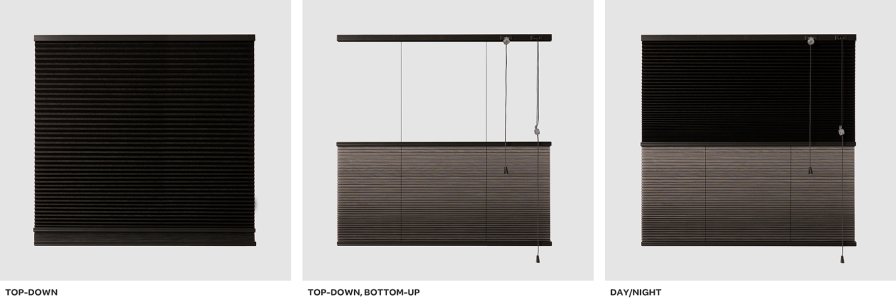
Another reason we love honeycomb blinds is their innovative operating options. Use them the traditional way lowering from the top down, or position the blind wherever you want on your window for using our popular top down-bottom up operation system; this offers maximum flexibility and light control. Depending on your budget, child safety concerns, large or high up windows, honeycomb blinds come in a range of ways to operate the blind by either cord, clutch cord, cordless or motorised systems.
Can you use them on the same window as curtains?
Yes, great choice. Either pair a blockout honeycomb blind (for night) under sheer curtains (for day), or use a translucent or sheer honeycomb blind (for day) under a lined curtain (for night). You could also double down on insulation in very cold rooms with both a blockout honeycomb blind and lined curtain that both close at night.
Why choose honeycomb blinds?
Better insulation
The cells of blockout honeycomb blinds create a pocket of air that acts as a barrier, not too dissimilar to how double glazing works.
Noise dampening
While honeycomb blinds won’t completely block sound, they will help to reduce it. Again it is similar to double glazing as soundwaves do not carry well through that pocket of air.
Discreet
Honeycomb blinds concertina up into a slim profile that can be easily hidden by the header rail. When fitting these blinds within a window frame, they provide a sleek, minimalistic look to compliment any home and décor.
Ready to find the right blinds for your home? Request a free in-home consultation and one of our local consultants will bring the samples to you, measure up, and give you a no-obligation quote.
Found this helpful? Share it with others…
Guides

Choosing the right blinds for your home
Not sure which blinds will suit your home? From blind types and key features to room-by-room advice, this guide covers everything you need to know.


Frequently asked questions
What are honeycomb blinds made of and how are they built?
Honeycomb blinds are made from pleated fabric formed into rows of hexagonal cells — the shape that gives them their name. Each cell traps a pocket of air across the window, and the fabric comes in light-filtering and blockout finishes to suit different rooms.
What is the difference between 10mm and 20mm cells?
The 10mm cell has a slimline look that suits smaller windows or tight frames, while the 20mm cell looks great on larger windows, stacks into a smaller space at the top and offers more insulation. The 20mm size also comes in single and double cells, with the double cell insulating best.
Are honeycomb blinds child and pet safe?
They can be. Honeycomb blinds come in cordless and motorised options that remove the cords and chains young children and pets can get caught in. Your local consultant can talk you through the safest way to operate the blinds in your home.
Can I use honeycomb blinds with curtains?
Absolutely. You might pair a blockout honeycomb blind for night-time under sheer curtains for the day, or layer a sheer honeycomb under a lined curtain. In very cold rooms you can use a blockout blind and a lined curtain together for extra insulation.
Expert advice at home
We come to you, anywhere in New Zealand. Because your place is the best place to choose curtains and blinds.