




Optimising your space with curtains

- Russells
- Curtain & blinds experts
In short
Curtains can change how big or small a room feels. Hang them high and to the floor to draw the eye up and add height, use stripes and colour to fool the eye, and choose the right length, width and fullness for the look you want. Get these details right and you can make a small room feel more open or a large one feel cosier.
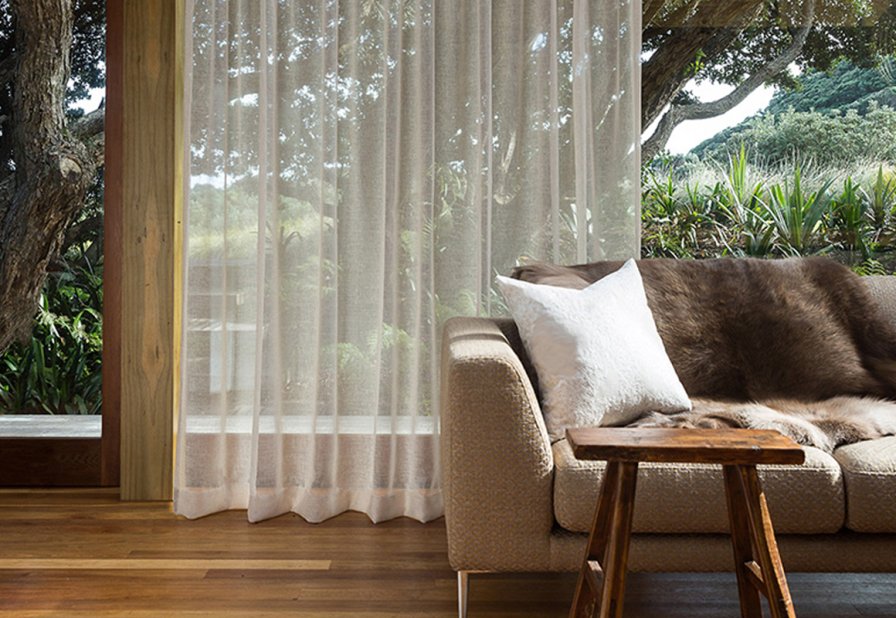
The right curtains can be used cleverly to alter the perception of the size of a room. Whether you want to make it feel bigger or smaller, here’s our advice on how to hang them to create height and fullness, and how to use stripes and colour to fool the eye and make the most out of your space:
Table of contents
4 ways to use curtains to make a room look bigger or smaller
Hang them high on the wall, right up near the ceiling, and right down to the ground. This draws the eye upwards creating an illusion of height.
Stripes can fool the eye. For small rooms with low ceilings choose vertical stripes to add height. While horizontal stripes will visually shorten wide walls and/or high ceilings.
Choose a fabric in a slightly lighter shade of the wall colour to open up a small room; use darker coloured curtains to make a larger space cosier.
Long, solid curtain rods can create an impression of spaciousness. With them, you can pull the curtains clear of the window exposing its full width to make it appear larger and let in more light. This will also protect the fabric from sun fade.
How long should my curtains be?
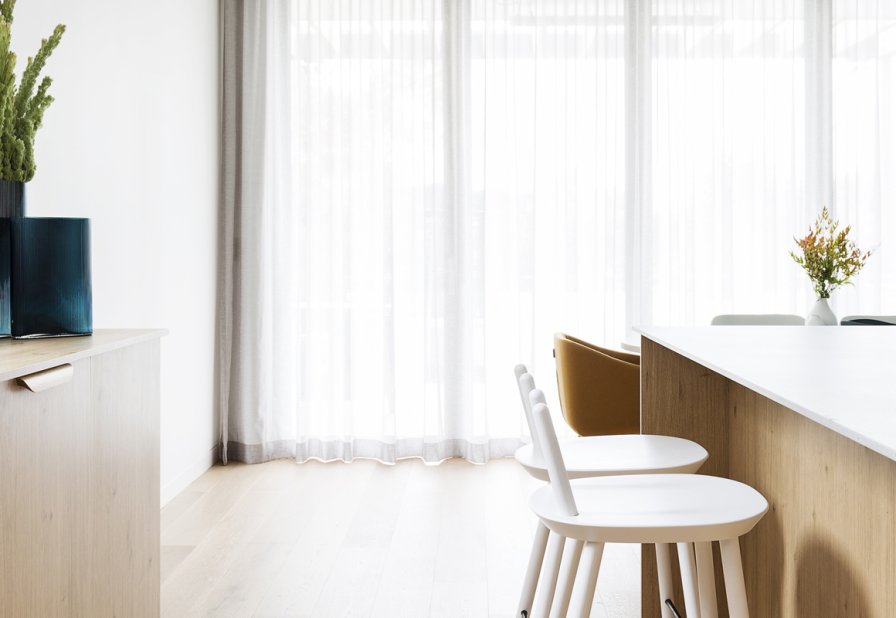
Down to the floor is the best length. They look good and in winter, perform better at retaining heat, but just below the sill is also acceptable. In between these lengths is a no-no; quite simply, it looks bad. You may also want to consider shorter curtains in kids’ rooms so they’re not tempted to play with them.
How high and how wide should curtains be?
For the best, most standard look curtain rods or tracks should hang on the wall about 10-15cm above the window frame or about halfway between the top of the frame and the ceiling.
Your curtains should also extend past the sides of the window frame if space allows; how far is up to you.
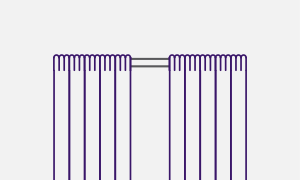
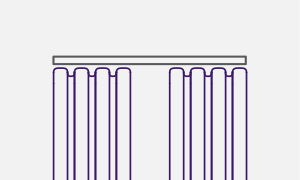
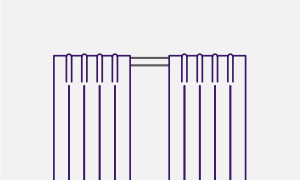
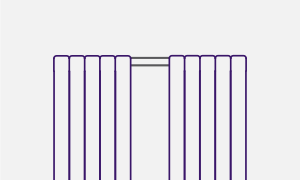
The width of your curtains has a huge impact on how they look. Curtains hang with waves or ruffles so your curtains will actually be much wider than your windows. The amount and size of the waves is known as ‘fullness’ and there are a few factors that can influence this, including the heading style and pleat. For instance, a reverse pleat will provide a flatter look than a pencil pleat or triple pleat and the fullness scale can vary from about 60% fullness for a reverse single pleat (1.6 times the track length) to 120% or even 140% fullness (which is 2.2 or 2.4 times the track length.) Less full heading types like the reverse single or single pleat are great if wall space is limited. Read more about heading styles in our Guides and Advice section.
When hanging them, you also need to allow room for the stack – this is the way they sit when open. Allowing them to cover about 30cm either side of the outside edges of the architraves is a good standard, unless the window goes all the way to the wall and there isn’t room.

Should curtains touch the floor?
There are several variations on what ‘floor length’ can mean:
Floating: offers a simple and sensible, casual look. By leaving no more than a centimetre of space between curtain and floor they’re practical too as floating curtains don’t gather dust from the floor. They are also easier to open and close. Also bear in mind that any gap between the curtain and the floor leaves room for light and air to travel underneath so curtains that touch the floor (or longer) provide the best light blocking and insultation.
Touching: requires expert measurement as just a centimeter too short or long and you have a completely different look. However, it is a clean and simple choice. Better on hard surface floors as opposed to carpet, which it can pull against when opening and closing.
Breaking: a very common length. It means the curtains are just that little bit longer and they rest on the floor with a slight bend just above the hem. A few centimetres is enough to create a stylish break.
Pooling: sees a large amount of fabric pools or puddles on the floor. This style does gather dust and they need some reshaping every time you move them so they are high maintenance. The type of fabric you choose will influence whether you can attain this look or not. Stiff, heavy fabrics aren’t quite as successful as light, airy ones like cotton or linen. Pooling curtains add a lovely softness to rooms with lots of hard furniture. For a relaxed and casual look with a fabric like linen, let them pool where they fall. For a more formal look, deliberately pool them to the left or right or centre, depending where the wall panel is in relation. They are also better in bedrooms than main living areas as the excess fabric on the floor can be a tripping hazard.
Ready to find the right curtains for your home? Request a free in-home consultation and one of our local consultants will bring the samples to you, measure up, and give you a no-obligation quote.
Found this helpful? Share it with others…
Guides

Choosing the right curtains for your home
Not sure which curtains will suit your home? Find out everything you need to know with this free guide.


Frequently asked questions
How can curtains make a room look bigger?
Hang them high near the ceiling and down to the floor to draw the eye up, use a lighter shade than the wall to open the space, and choose vertical stripes to add height. Pulling curtains clear of the window also lets in more light and makes the window feel larger.
Where should I hang the curtain rod to make a room feel taller?
Mounting the rod well above the window frame — ideally close to the ceiling — draws the eye upward and makes the walls feel taller. In a smaller room this simple trick adds a real sense of height and space without any structural change.
What does curtain fullness mean?
Fullness is the amount of wave or ruffle in a hung curtain, so the fabric is wider than the window. It ranges from about 60% for a reverse single pleat up to 120–140% for fuller pleats. Less full headings suit windows where wall space is limited.
Is it better for curtains to reach the floor in a small room?
In a small room, curtains that just touch the floor work best. The unbroken line from rod to floor adds height and makes the space feel larger, whereas curtains that hover above the floor break up the wall and can make a compact room feel smaller.
Expert advice at home
We come to you, anywhere in New Zealand. Because your place is the best place to choose curtains and blinds.